
Description
This collection was designed in conjunction with a ‘conversation lecture’ entitled “Ancient Aromatics” given by DSH at the Denver Art Museum in September, 2010 as part of the museum’s exhibit KING TUT. To create these perfumes, DSH researched, re-created and re-formulated sacred temple perfumes as well as luxury perfumes from the ancient world. Limited Edition Mummy presentation bottles were created for DAM as well as specialized perfumes and unguent solids.
** Perfumes of the ancient world were made of all natural materials; mostly botanicals and some animal essences. In keeping with the authenticity of the materials, The Secrets of Egypt collection has been created using botanical, precious and rare essences with minor elements of synthetics to replicate the wine nuances.
*********************************
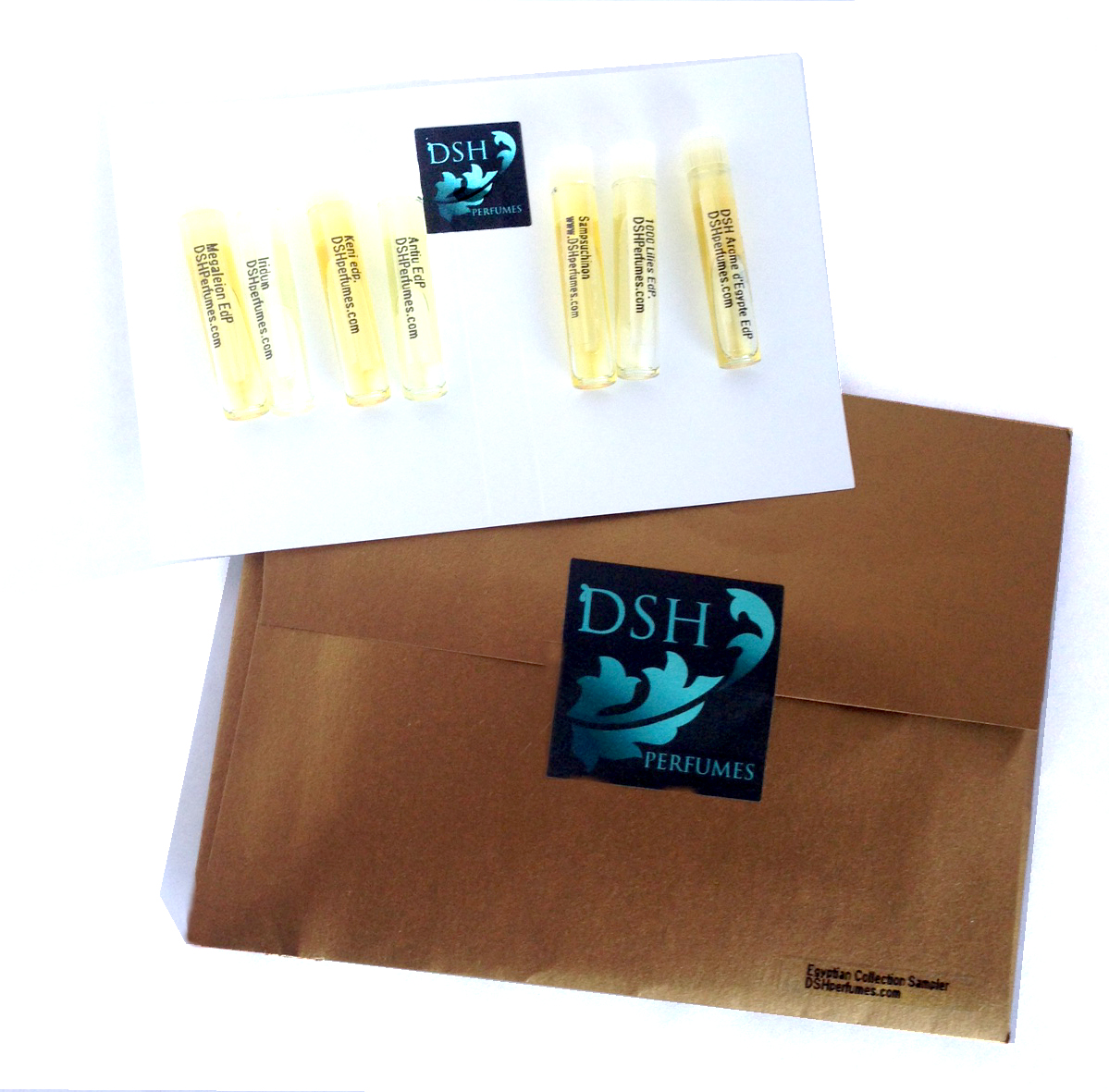
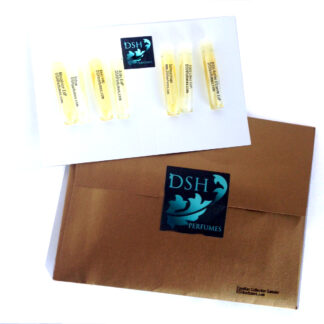
The Secrets of Egypt Discovery Set includes a 1 ml vial of the Eau de Parfum or Eau de Toilette of each design (both Old Kingdom and New Kingdom scents):
Keni: Keni, which means “embrace”, is a sexy and deep spiced cedarwood and resin perfume, which in the ancient world it was so renown that it was simply known as “the Egyptian”, is more than just a cinnamon spicy oriental perfume and brought it around to an amazingly modern, spiced wood design. Leaning a bit to a “men’s” style scent in the feel, Keni is a dark, sultry, resinous and spicy cedarwood perfume.
Antiu: Antiu is the name we chose for our modern adaptation of “Metopion”, an ancient perfume that was known some 300 years before Pliny the Elder and Dioscorides mentioned it in their writings. The actual meaning of Antiu is vague… it may refer to a specific, yet unknown, resin of the ancient world or it may just be more poetic and symbolic as it was considered to be the most exquisite fragrance imaginable and hence the ideal scent.
For our “New Kingdom” redesign of this unusual pairing of bitter almond and galbanum, there is a greater pine / conifer / resin emphasis which makes it’s unique vision cleaner, clearer and even more enticing.
Iridum: A coming together of Rome and Egypt, like Antony and Cleopatra. This cool Mediterranean Iris meets the sensual spice and incense of Egypt… with modern new world woods; A very true yet “out of the box” Orris perfume with a rich woody finish and subtle spice and incense notes. Iridum, as it comes to us from the ancients in the Roman / Latin, is the closest of all of the “New Kingdom” releases to the original concept of the scent, as it is nearly all botanical, but some stylistic liberties were taken in the form of new materials to render a gorgeous, woody / incense Orris that is chic, more modern than earthy, and quite universal (unisex).
Megaleion: Although the origin of this marvel of the ancient world isn’t entirely clear, it is said to be named for it’s creator, “Megalus”, making Megaleion one of the first “designer perfumes” in the world. It became immensely famous for it’s extreme cost to produce and the complexity of ingredients. For our first re-creation of Megaleion, we attempted to be as true as possible to the spirit and ingredients in this ancient perfume but for our “New Kingdom” remix we went all out to bump up the balsamic note and add a rich dose of costly black agar making it far richer and decidedly more modern.
Sampsuchinon: A surprisingly delightful interplay of green, cooling herbal notes and warm incense and spice; dedicated to the Egyptian God of the Crocodiles, Sobek, Sampsuchinon is a wonderfully green scent with unexpected nuances of spice and resin that gives it it’s unique depth. The herbs most closely associated with Sobek are marjoram and oregano which are sweetly fragrant. In western perfumery, marjoram and oregano are almost exclusively used in men’s designs, Sampsuchinon is remarkably suited to both men and women.
1,000 Lilies: 1,000 Lilies is a fresh, yet otherwordly true lily perfume with spice, resin, and incense notes in the drydown. Susinon, as it was called in the ancient world, was a luxurious and strongly scented lily perfume that was made by the Egyptians as well as the Greeks, but the Egyptian version was thought to “excel most’. This fabulous fragrance was also used by Cleopatra to scent the sails of her royal barge, perfuming the air along the Nile as she sailed, proclaiming herself as Goddess and Queen. The exhaustive recipe for Susinon calls for spices and resins to first be soaked in fragrant wine and balanos oil to be prepared. When the oil ready, it is added to the spices along with 1,000 lilies. Interestingly, in our time a lily perfume would be almost exclusively worn by women, but for the ancient Egyptians, Susinon was one perfume deemed suitable for a man.
Cardamom & Khyphi: An ancient incense design with a dominant cardamom topnote. It’s sweetly spicy and deeply resinous. KYPHI (an alternate spelling is Khyphi) is probably the most famous of all early Egyptian perfumes handed down to us from antiquity. Kyphi is the Latin version of the Greek translation of Kapet in Egypt which was originally a general term for fumigation through smoke and was used in the temples. Eventually Kyphi developed a particular recipe and ‘brand’. Primarily used as an incense, Kyphi was also used as a remedy for such ailments as nightmares and snake bites.
Arome d’Egypte: Ancient. Occult. Immortal. While developing a collection of ʻscent studiesʼ on one aromatic note, DSH chose spikenard, an ancient root used extensively in early Egyptian perfumes, as a focus. Spikenard, a botanical relative to valerian, is used to soothe, relax and bring one into a meditative realm. When mixed with incense resins and spices it is truly intoxicating. An equally suitable fragrance for a man or a woman, Arome dʼEgypte brings you back to the seductive world of the Ancients. Arome dʼEgypte Perfume has adapted early Egyptian fragrance styles and aromatic notes into a modern fragrance in the French perfume tradition.



Reviews
There are no reviews yet.